Is Retouching Restoration?
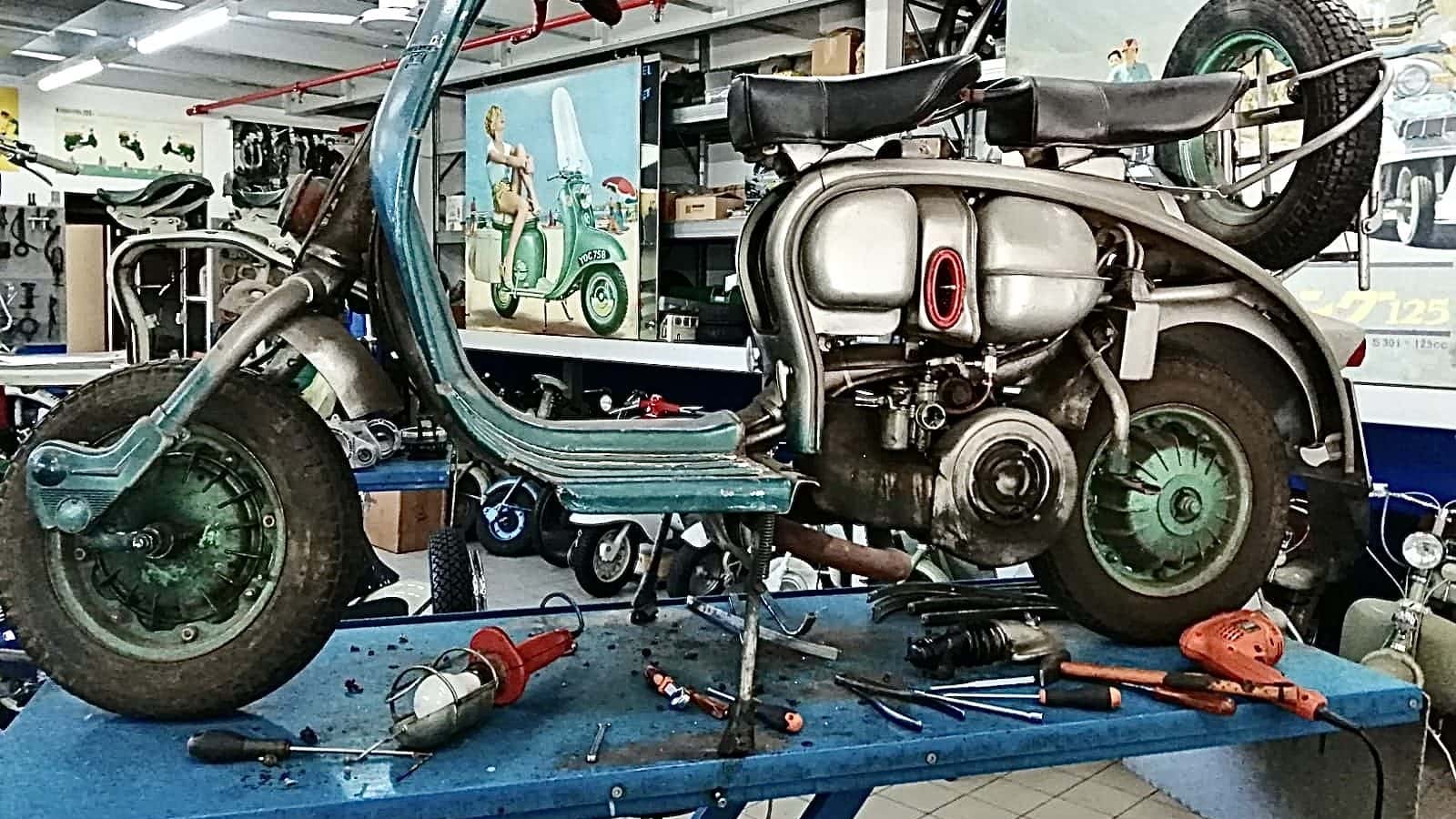
After years of neglect, I’m finally having my grandfather’s ’58 Lambretta restored. And what does that have to do with retouching, you’ll ask… well, plenty. Just not for the reason that might come to mind first.
Let’s start at the beginning. Restoring something old and worn out, bringing it back to its original splendour, is a job for monks, and when done well, for artists. But it isn’t the same job as the retoucher’s. The retoucher doesn’t bring a photo back to an original: they build it from scratch, within the constraints set by the photographer and the creatives. There’s no past splendour to recover, only a new one to invent.
There’s no original Lambretta to look at, no factory spec sheet to follow, only the technical characteristics of the file.
Soul Within Constraints
The retoucher has to use their soul and experience to add their own feel to the photographer’s, without ever overriding it. They have to know which piece of bodywork, which small adjustment to the handlebar, needs to be added to push a photo to the top of its potential.
That’s why our work is so hard, and few of us last the distance: the temptation to go for an extreme custom job, the kind you see on Pimp My Ride or American Chopper, is often too strong. And it always, inevitably, leads to losing the client’s trust.
“Hey, I gave you a Lambretta, and I’m getting a Chopper back!”
The Distance I Have to Close
Meanwhile, my grandfather’s ’58 Lambretta is in the hands of a real restorer. He has an original to go back to: period photographs, Innocenti colour codes, technical manuals. When I open a file, I have none of that. I have the photo as it is, and the one the photographer pictured before they even pressed the shutter. My job is to close that distance without turning it into a Chopper.
I’ve been at it for thirty years. It isn’t always easy.
PS. This post was written by a human.