AI in the studio: what it can do, and what I’ll never let it do
A few months ago we received a file with the terrible label “Shot with AI.” An oxymoron by definition, since AI doesn’t shoot a thing. It just grinds up and reshuffles what has already been seen and already been done. The shoes were floating on a rug with the texture of another planet, there were no shadows, the hands blended into the background, the proportions were unrealistic, and the perspectives were fantastical to say the least. What we did was finish it in a plausible, photographic way, working from more or less coherent source material. We had to change the depth of field entirely, redraw missing shadows, and rebuild hands. The final result was almost always of a quality vastly inferior to what a real photo could have been, with considerable time losses for the production.
“AI is here to stay,” there is no point denying it or pretending nothing has changed, because everything has already changed. I am sure that in the near future the quality of generated files will be incredibly better than it is today, but for now it is not. What will change is the correct application of the tools at our disposal, not their outright rejection. Whoever can steer an increasingly faster machine and bring it across the finish line without crashing will be the winner of the grand prix, and will not be replaced altogether by the machine.
AI is not, and will never be, a replacement threat, because it can solve some problems, but in most cases, if you let it run free, it creates disasters that are hard to fix quickly. And besides, how do you explain Beauty to a machine? The people who will be replaced are the ones who were already doing only the work that a machine now does better, faster, and with fewer errors. The countless Indian platforms that used to offer retouches for 3$ or cutouts for 0.30$ are already in crisis, and there is no way for them to close the enormous gap they have always had: knowing what is right and what is wrong. It takes decades to learn that, and fortunately for us that hurdle is not easy to clear.
There are plenty of things I happily hand over to AI. The base cutout of a person or a piece of clothing for light color variations: what once could only be done by hand, over hours of work, today takes ten seconds at most. But watch out: human judgment and manual control have to be applied precisely and ruthlessly. Nothing the machine does can be taken for granted, because even when it looks plausible it can hide gross mistakes. Another tool I use with something close to joy is the removal of cables, distractions, and small unwanted objects: I would never go back to doing that pixel by pixel. The difference, though, is that all our operators can do that work by hand too, and so they can tell whether the job is done well or needs to be redone.
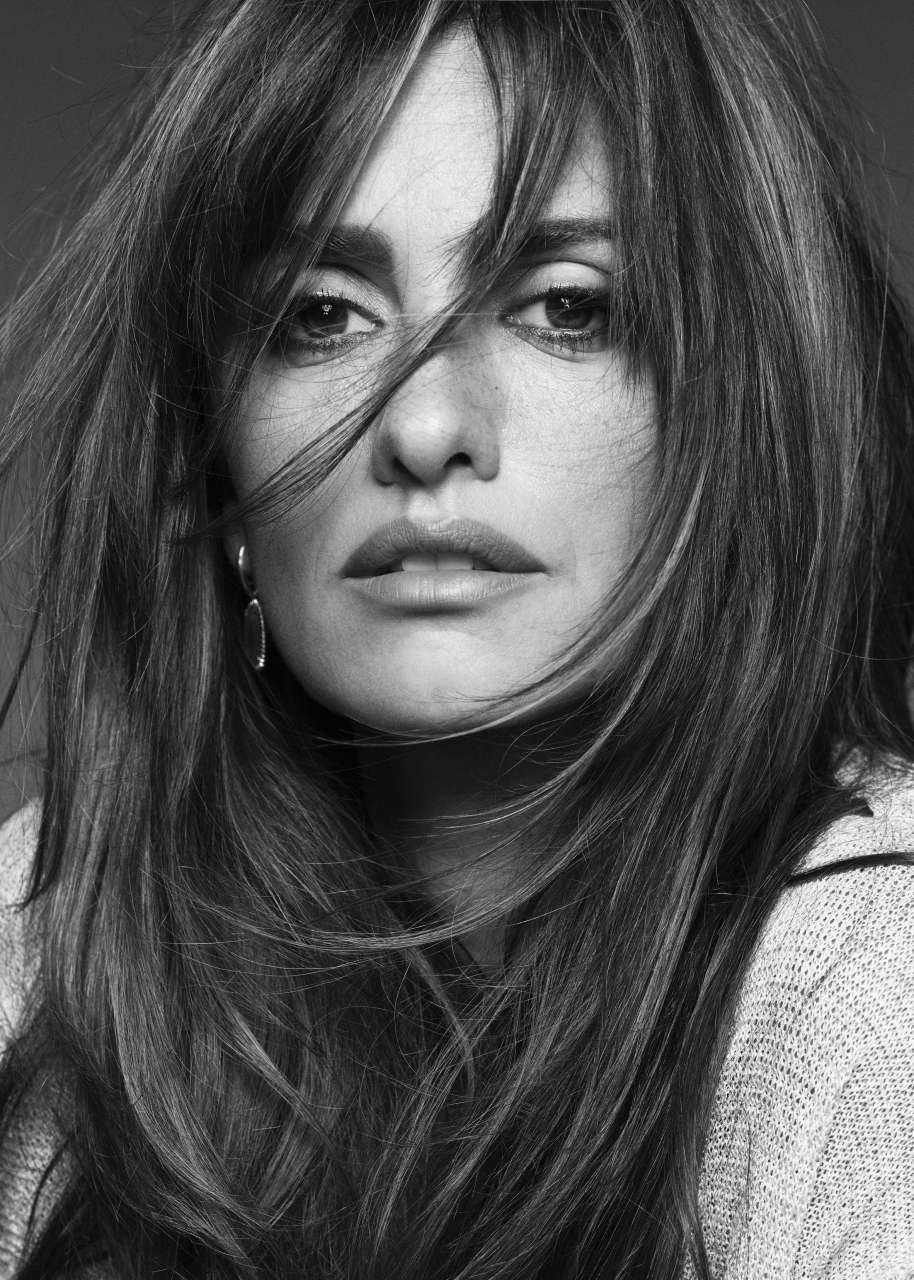
The things we will never delegate to a machine are all the ones that have to do with the human being. Skin retouching, changes to body proportions or facial features, makeup, coloring: everything that makes Digital Area different. Any automation, even the non-AI kind, like the old-school frequency separation, homogenizes and erases character. The face loses recognizability, it looks like a mobile-game skin. Multi-plate composites have to be done by hand, with real understanding: when the light comes from different shots, you have to figure out where the eye goes, how the scene’s composition guides the shadows relative to photographic reality. AI has no direction. It runs on rough generative rules that change with every generation. And then there are the faces of celebrities: who would ever leave their retouching to an automation? A single mole removed can set off a cascade of problems. In short, we will never let a machine flatten our creative input, or the trust we have built with the photographer and the final client. There is a deontological responsibility here that is too important, and betraying it would mean betraying thirty years of work.
The real risk is not AI itself, it is who uses it without knowing how to retouch. The junior who generates skin from scratch without understanding where the light sits, or how skin reacts to different exposures and angles, produces fake work you can spot from a mile away. AI amplifies the gap between those who know and those who do not. Those who know use it as an accelerator. Those who do not use it as a crutch and produce very low-level content, scalable.
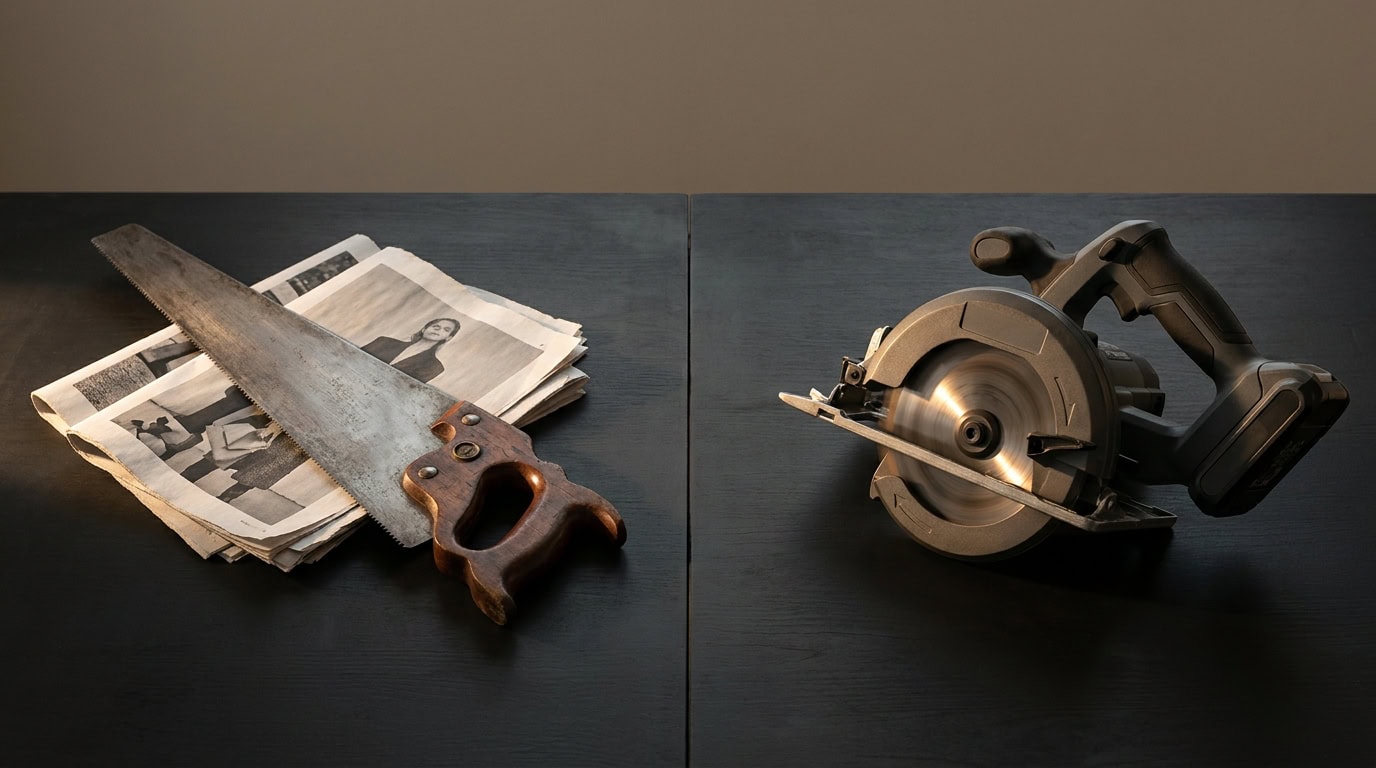
Sometimes a client asks us to use AI so it costs less. But that is not our case. We are not hired as a studio to cost less. We are hired because we can produce content at the highest level, knowing when to use one tool over another. Professional retouching is paid for the decision-making, not just the execution. If I decide not to use AI on a file, that choice is part of the value. If I decide to use it, the time savings that come with it do not get passed on as a discount, because I used my experience to produce trustworthy results. Would you ever ask a carpenter for a discount because he uses a circular saw instead of sawing by hand? Whoever gives you a discount for using AI is also giving you fewer decisions, and therefore less quality at the end.
I am not afraid of AI. I am afraid of those who expect AI to make the retoucher disappear. It does not work that way, and it will keep not working that way as long as there are clients who can see the difference.
PS. This post was written by a human.