The retoucher’s craft is no walk in the park
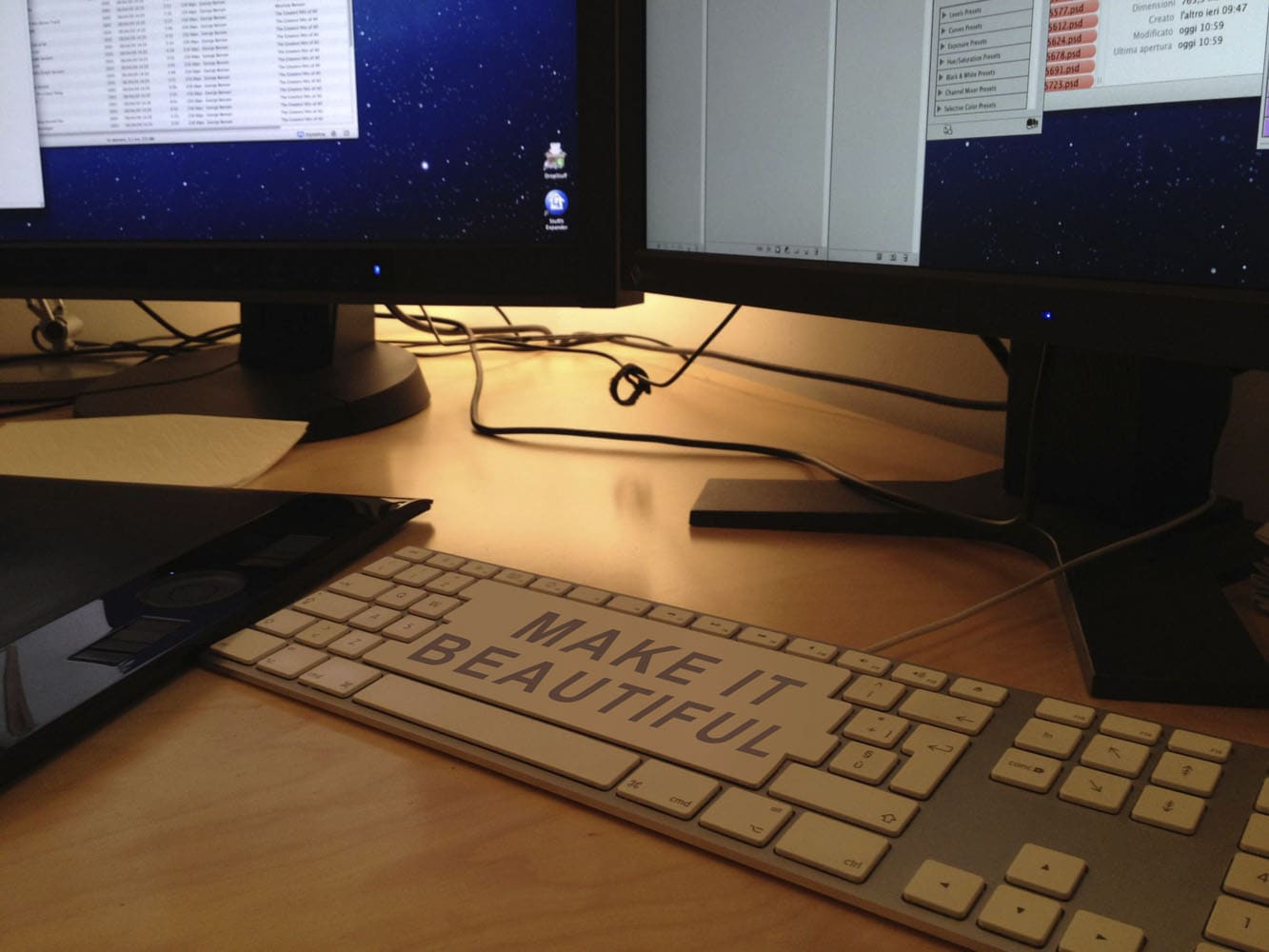
It may look that way at first glance, but it demands a passion and a meticulousness that not everyone has. Being willing to spend years in front of a monitor under someone else’s guidance to reach the level a seasoned photographer expects is no small feat. Nor is it easy to deliver a job that often goes uncredited and that the client themselves keeps quiet. The retoucher is a person whose work ethic and, above all, integrity have to be exemplary. After all, too many people claim the title “retoucher” far too lightly. Our work, to be done well, has to be likened to that of a high-end cobbler or tailor, with a selective and discreet clientele. Not prêt-à-porter but haute couture, made to measure. We have to know how to highlight strengths and conceal flaws, but we can’t boast about it in public. We should take Ferragamo as our model — his insatiable hunger for innovation and quality, his promptness in offering made-to-measure solutions. There’s no big “make it beautiful” button; you have to earn it piece by piece.
Which technique?
As with a musician or a photographer, it isn’t enough to know the technique or own the latest gear; it isn’t enough to know how to “tinker” on Photoshop and be familiar with every trick you’ve stumbled across on YouTube. You have to feel the craft. You have to pick it up in someone’s shop, from someone, and learn the real trade. Like any other job, what you study in school often has nothing to do with the working reality and, above all, is miles away from what the market actually wants. The retoucher shouldn’t think of a photo as a set of pixels to be adjusted according to a histogram or a prefab workflow: to truly understand how to express the best of their potential, the operator has to think more like a painter, a sculptor, a photographer. A photograph, in fact, captures the moment and fills it with every expectation, intention and soul of the person who took it, along with those of the whole team down to the last assistant. It can’t be treated coldly, mechanically, with standardised methodologies — unless you’re after a standardised and mediocre result. Every photo deserves to be watched and understood carefully, retouched as little as possible, adding and removing only those details that experience teaches you to recognise. Unfortunately there’s no shortcut: it takes years, thousands of photos, and different approaches to become what photographers are looking for — someone who completes them and whom they can trust with their creations, their photos.
A bit of history
The art of retouching has its roots far back in time. I’m not talking only about the history of photography, which is relatively recent. Photographs have always been retouched: if not in Photoshop, then with faded masks applied during the exposure and printing of a negative, or even with a pen and red ink directly on the negative to lighten or erase wrinkles and other details. Long before that, and ever since humans started representing reality, they’ve always “retouched” it. They’ve presented it through their own experience, sometimes even unconsciously adapting it to the narrative of any given episode, playing down certain details and amping up others. A prime example: think of portraits of commanders or emperors, painted and sculpted. Always represented as demigods — but were they really all so powerful, so beautiful, so perfect? There’s no bare, unadorned reality: everything is modified, everything is retouched. So we have to be very careful about what we do, do it as little as possible, especially now that we live in a society where content piles up needlessly, everywhere. Going from a retouch to a “Photoshop disaster” takes just a moment of distraction.
Disasters, and where to find them (and how to avoid them)
A glaring example of excessive retouching — or badly done retouching — made the front pages on 11 March 2024. Princess Kate Middleton at the centre of a small media storm over a photo she claimed she’d retouched herself; you can find it here in the New York Times post. It’s the perfect example of how Photoshop, used badly, can generate communication disasters of biblical proportions. How do you avoid them? First of all, by hiring accredited professionals with years of experience… but beyond that, just don’t look at the photo for what you want it to be, but for what it is. Let me explain. When Michelangelo Buonarroti painted the ceiling of the Sistine Chapel, he did it lying on scaffolding inches from the ceiling. Do you think that, supreme genius or not, he didn’t obsessively check every detail from the viewer’s point of view — that is, from the ground? We should do the same, with due proportion to Michelangelo. Let’s zoom out, clear our heads of what we’ve done and, above all, of how clever we think we’ve been at doing it. Let’s picture ourselves as any random person walking past our monitor and seeing the image for the first time. What’s wrong, what can I improve, and above all what can I undo because it’s too much? This simple trick, combined with saving often and keeping different versions of the file, can save you from becoming the next piece of gossip. If you want some fun, you’ll find plenty of disasters here.
PS. This post was written by a human.