Generative AI and Retouching: Replacement, Amplification, or Drift?
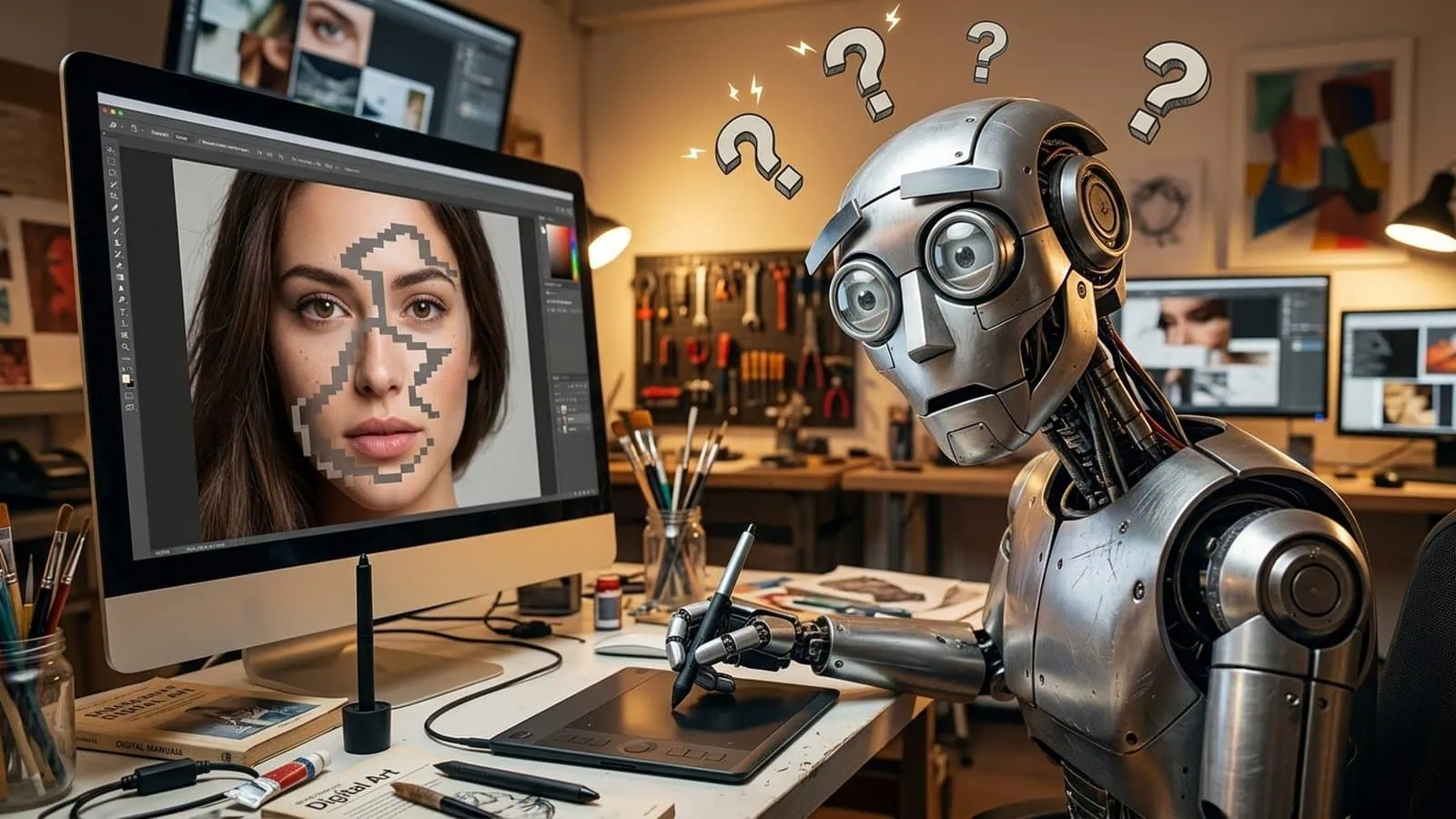
A retoucher’s take on generative AI, the line between tool and substitute, and why a human still has to put their hands on another human.
AI is amazing — we do everything with this thing now; by this point even your coffee isn’t good unless AI has told you the recipe to make it good!
Reality is VERY different from the hype of the last few months — but let’s go, in order…
AI is an incredible technology, comparable to the invention of fire or the wheel… only far more disruptive and certainly far faster in adoption. Pushing back with the usual “but we’ve always done it this way” would mean walking straight into professional death. As a dear friend of mine, Marco Camisani Calzolari, likes to put it: the arrival of AI is like the end of the carriage and the rise of the car. Only this time you can’t reinvent yourself that quickly — the people who built carriage frames can’t easily start building frames for cars.
Will Smith Eats Pasta
Let’s step back a few months. The famous Will Smith eating-pasta video found here, or the photos with six fingers on a hand, are by now in the past — and even a seasoned professional like me has trouble telling whether a photo is generated or real. The tool is already mature for advanced professional use — no doubt about it.
AI Is a Tool, Not a Substitute
But (a big, fat but) AI is, precisely, a tool. And it has to be treated as such. It has to be treated as an addition, an extension, of the human. A tool that helps the human with the boring or repetitive tasks that take a lot of time to do. In our case as retouchers, for example, anything to do with extending the format of a photo, removing distracting objects… and so on. Where the wheels come off is when we talk about repetitive operations or targeted fixes with a precise aim. In those cases you get the clear feeling that AI is taking a guess. Sure, often it gets it right — but the result is mediocre. In our specific example, Digital Area’s code of ethics forbids us from using AI for any retouching on a human being that would alter their appearance. Not out of some technological bigotry — simply because I’m convinced that a human has to put their hands on another human. The machine is cold; just as a digital amplifier will never reach the warmth of a tube one, AI will never, by its very nature, treat a wrinkle, an expression, the way a human being can. The emotional connection is just too intense and too deep. I’m not saying AI does a bad job, you know — I’m saying it does TOO good a job, always in the same way, on every face. Everything ends up looking the same.
Amplifying human work and making it faster and more constructive should be the guiding star of every intervention. Where AI can be used to speed things up and standardise, OK, by all means. Where it flattens everything out, no.
The Retoucher Without Wi-Fi
A practical example of the laziness this kind of technology induces: some “retouchers” — quotation marks more than warranted in this case — ask if there’s an internet connection at the place they’ll be retouching, like on a photo set. They ask because they’re no longer able to retouch by hand without AI. It’s like a lumberjack who no longer knows how to fell a tree without a chainsaw. You have to know how to do the craft by hand first, and then use the tools to make it faster. For this and other reasons, AI is causing no small problem to the new generations who, confused and softened by the abundance of automation, never learn to do things the way they should be done. Baby steps.
“Do You Use AI?” — The Client’s Question
Sometimes we get a request from a client: “Do you use AI?”. The answer is always a roll of the dice. What do they want to hear — that I use it? That I don’t? If I use it does the photo cost less? If I don’t, am I fast enough for what they need? My answer is invariably that I use it only and exclusively for everything that isn’t human — a face, a hand, anything that carries an emotion in the photo.
The Right Tool for the Right Job
In the end, I’d rather always be considered a craftsman who picks his tools with great care: the right tool for the right job.
PS. This post was written by a human.